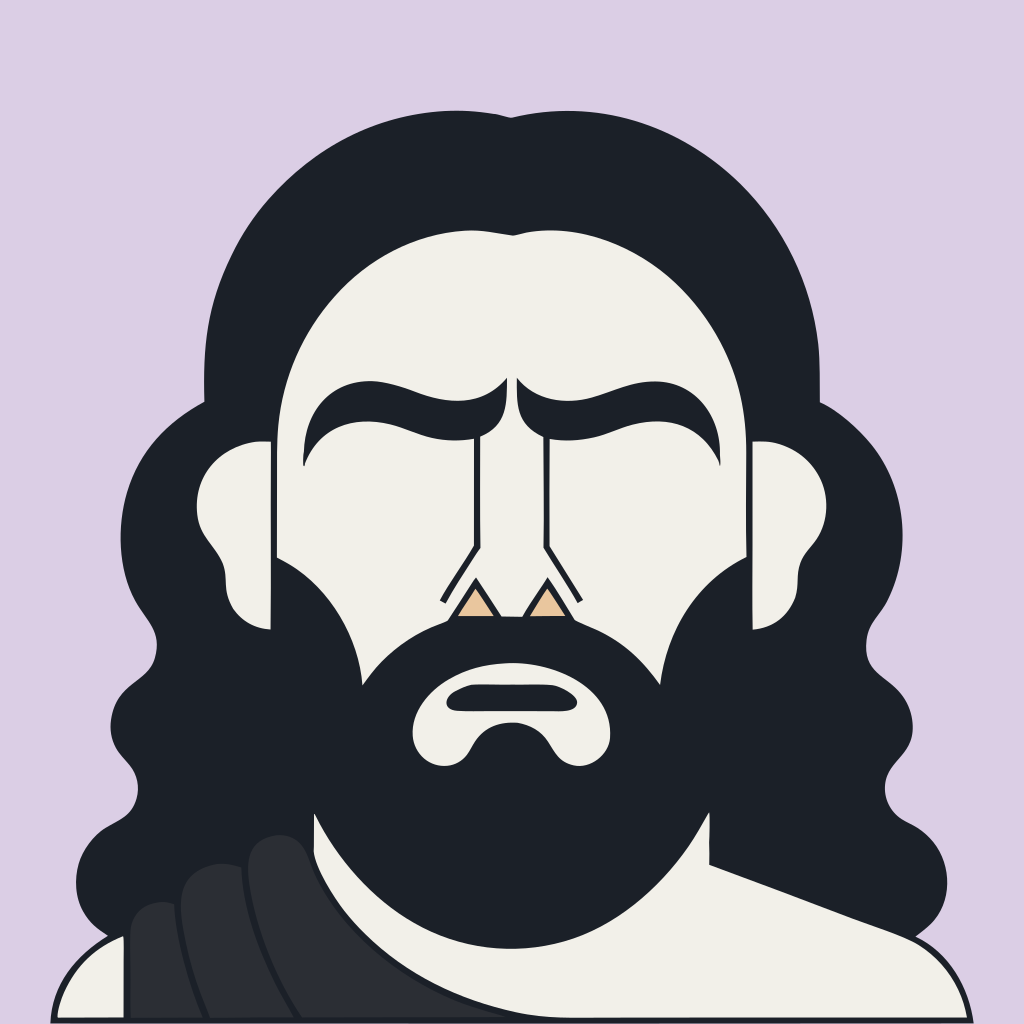
Heraclitus of Ephesus
535-475 BC · Early Greek Thought · Prominent
Heraclitus belonged to the Greek thinkers who came before Socrates, and he taught that everything flows. You cannot step into the same river twice, since fresh water keeps arriving. He saw a world of fire and change, held in shape by a hidden order he called Logos and by opposites that pull against each other and turn out to be one thing. He wrote so cryptic a prose that antiquity nicknamed him the Obscure.
Signature
The position Heraclitus is most identified with in the Profiler:
- Opposition
- mildly between Sublation and Concurrence
- Time
- Process / Becoming
Positions on the 7 axes the sources answer
- Identity
- leans Changing (75 on a 0–100 scale from Unchanging to Changing)
- Meaning
- leans Inherent (75 on a 0–100 scale from Constructed to Inherent)
- Order
- leans Vertical (17 on a 0–100 scale from Vertical to Horizontal)
- Nature of Reality
- leans Unity (20 on a 0–100 scale from Unity to Multiplicity)
- Truth
- leans Objective (80 on a 0–100 scale from Subjective to Objective)
- Opposition
- mildly between Sublation and Concurrence (60 on a 0–100 scale from Sublation to Concurrence)
- Polity
- leans Illiberalism (25 on a 0–100 scale from Illiberalism to Liberalism)
13 of 20 axes are left blank: the sources do not answer them, or Heraclitus refused the framing. Nothing is imputed; a blank is not a middling score.
Foundational questions
- Theology
- Pantheism
What is your position on the existence and nature of God or gods? - Government
- Epistocracy
What is your ideal form of government? - Highest Good
- Knowledge
What is the highest good? - Good and Evil
- Dialectical
What is the fundamental nature of good and evil? - End of Things
- No End
What is the ultimate end of all things? - Perception
- Conceptual Mediation
What do we directly perceive? - Knowledge
- Coherence
What is the ultimate foundation of knowledge? - Ethics Basis
- Natural Law
What is the ultimate basis of ethics? - Agency
- Compatibilism
What is the nature of human agency and freedom? - Beginning of Things
- Cyclical Recurrence
What is the origin of reality? - Time
- Process / Becoming
What is the fundamental shape of time? - Language
- Logos
What is the fundamental nature of language? - Paradox
- Coincidentia Oppositorum
What is the status of paradox? - Death
- Other
What happens at death? - Human Nature
- Other
What is human nature?