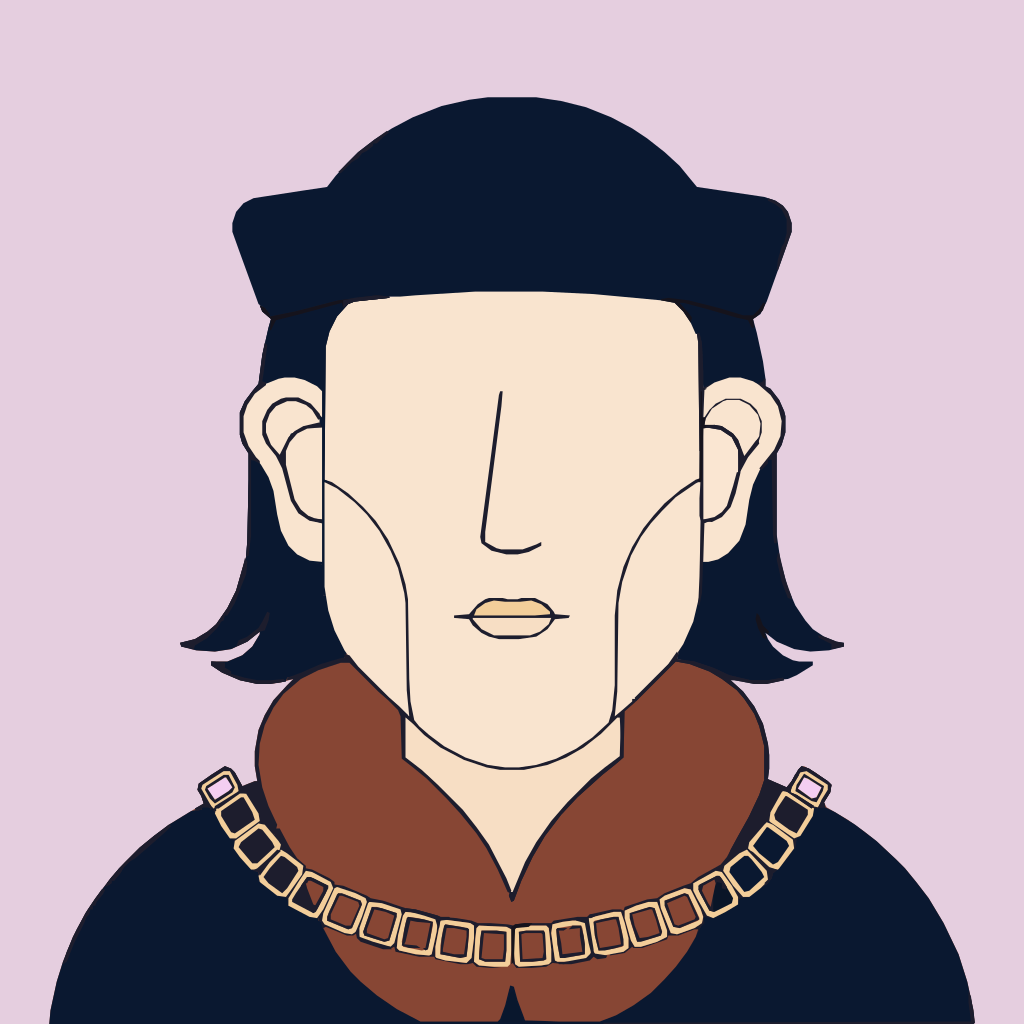
Sir Thomas More (Thomas Morus)
1478-1535 · Renaissance Humanism · Household name
More wrote Utopia as a debate rather than a manifesto: the character carrying his own name argues against the traveller who describes the island, and closes by calling several of its institutions absurd. His own convictions sit in the polemics and the prison letters, where he defends free will against Luther, grounds authority in fifteen hundred years of councils rather than private inspiration, and holds that reason ought to reign like a king yet cannot see far enough without revelation. He wrote as Lord Chancellor that the burning of heretics was lawful, necessary and well done. He then refused the oath that would have saved his life, having searched his conscience for seven years, and was beheaded for it.
Signature
The position More is most identified with in the Profiler:
- Ethics
- strongly leans Means
- Primary Bond
- The Divine
Positions on the 11 axes the sources answer
- Society
- leans Collectivism (17 on a 0–100 scale from Collectivism to Individualism)
- Mind
- strongly leans Beyond Brain (100 on a 0–100 scale from Brain Only to Beyond Brain)
- Meaning
- leans Inherent (85 on a 0–100 scale from Constructed to Inherent)
- Order
- leans Vertical (19 on a 0–100 scale from Vertical to Horizontal)
- Ground of Being
- leans Transcendence (85 on a 0–100 scale from Immanence to Transcendence)
- Truth
- leans Objective (85 on a 0–100 scale from Subjective to Objective)
- Polity
- strongly leans Illiberalism (5 on a 0–100 scale from Illiberalism to Liberalism)
- Ethics
- strongly leans Means (94 on a 0–100 scale from Ends to Means)
- War
- strongly leans Militarism (90 on a 0–100 scale from Pacifism to Militarism)
- Ignorance
- leans Bondage (15 on a 0–100 scale from Bondage to Bliss)
- Conviction
- mildly leans Certain (67 on a 0–100 scale from Uncertain to Certain)
9 of 20 axes are left blank: the sources do not answer them, or More refused the framing. Nothing is imputed; a blank is not a middling score.
Foundational questions
- Theology
- Trinitarian Monotheism
What is your position on the existence and nature of God or gods? - Highest Good
- Union with God
What is the highest good? - End of Things
- Division of Good and Evil
What is the ultimate end of all things? - Knowledge
- Tradition
What is the ultimate foundation of knowledge? - Agency
- Synergism
What is the nature of human agency and freedom? - Time
- Eschatological
What is the fundamental shape of time? - Authority
- Sacred Tradition
What is the legitimate source of authority? - Death
- Judgement
What happens at death? - Human Nature
- Imago Dei
What is human nature? - Primary Bond
- The Divine
What is your primary bond and loyalty?